

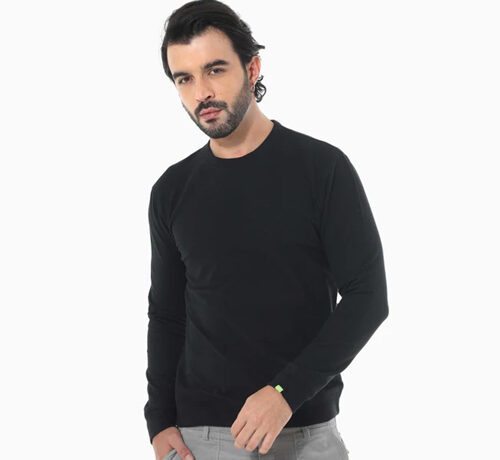
Short answer: a sustainable T-shirt, polo or hoodie can save between about 1 kg and 18 kg of CO₂e per piece, along with 1,000–5,000 litres of water, according to product-wise data published by sustainable apparel brand Caslay. Multiply those figures by your order quantity and corporate merchandise becomes something you can measure and report, not just a gesture.
This guide gives the full per-piece data, shows how to calculate the impact of a bulk order, and explains how teams use it for ESG, Scope 3 and BRSR reporting.
✔ GRS certified – Global Recycled Standard
Caslay’s recycled apparel and every Caslay bag are certified to the Global Recycled Standard (GRS), one of the most widely recognised international certifications for recycled products. GRS is owned by Textile Exchange, a global non-profit, and is granted only after audits by an independent third-party certification body, renewed every year.
- Recycled content verified – tracked through the chain of custody, from raw material to finished product
- Social requirements – workers’ rights and working conditions in production
- Environmental and chemical requirements – how processing and chemical use are managed
Caslay’s GRS certificates are issued through Clean Globe and each carries a unique ID that anyone can verify – evidence your procurement and ESG teams can file with the order.
Per-piece impact data for sustainable apparel
Caslay makes its garments from organic cotton, recycled industrial textile cotton waste and recycled PET bottles. Its 2027 Institutional Catalogue lists what each style saves per piece:
| Product | CO₂e saved | Water saved | Power saved | PET bottles recycled |
|---|---|---|---|---|
| Hoodies | 18.13 kg | 4,904 L | 1.04 kWh | 4.73 |
| Jackets | 16.73 kg | 4,527 L | 0.96 kWh | 4.36 |
| Quick Dry Polo | 15.55 kg | 1,179 L | 0.68 kWh | 4.55 |
| Sweatshirt | 13.94 kg | 3,773 L | 0.80 kWh | 3.64 |
| Sweat Polo | 12.97 kg | 3,508 L | 0.74 kWh | 3.38 |
| Recycled Polo / Sweat Tee | 9.76 kg | 2,641 L | 0.56 kWh | 2.55 |
| Fusion Polo | 8.52 kg | 1,439 L | 0.45 kWh | 1.82 |
| Recycled Crew | 5.57 kg | 1,509 L | 0.32 kWh | 1.45 |
| Organic Polo | 3.84 kg | 2,390 L | 0.29 kWh | N/A |
| Organic Crew | 1.16 kg | 1,243 L | 0.17 kWh | N/A |
Source: Caslay Institutional Catalogue 2027, “Impact | Sustainability | ESG”. PET bottles = bottles recycled into each piece; organic cotton styles contain no PET.
What the numbers tell you
- Heavier recycled styles save the most. Hoodies (18.13 kg CO₂e) and jackets (16.73 kg) are 320 GSM garments made from 60% textile cotton waste and 40% recycled PET.
- Organic cotton has the lowest footprint to begin with. The Organic Crew shows 1.16 kg CO₂e saved, and organic styles use no plastic at all.
- Performance fabric saves carbon with little water. The 100% recycled PET Quick Dry Polo saves 15.55 kg CO₂e but only 1,179 L of water.
- Everyday tees add up. Caslay equates the Recycled Crew’s 5.57 kg CO₂e to not driving a car for about 28 km, or charging a smartphone about 670 times.
How to calculate the impact of a bulk order
Multiply the per-piece figure by the quantity of each style, then add them up. Two worked examples:
| Order | CO₂e saved | Water saved | PET bottles recycled |
|---|---|---|---|
| 500 Recycled Polos (joining kits) | 500 × 9.76 = 4,880 kg | 500 × 2,641 = 13,20,500 L | 500 × 2.55 ≈ 1,275 |
| 200 Zippered Hoodies (year-end gift) | 200 × 18.13 = 3,626 kg | 200 × 4,904 = 9,80,800 L | 200 × 4.73 ≈ 946 |
| Total | 8,506 kg (≈ 8.5 tonnes) | ≈ 23 lakh litres | ≈ 2,221 |
Using the data in ESG, Scope 3 and BRSR reporting
- Classify it correctly. Branded merchandise is purchased goods – Scope 3, Category 1 under the GHG Protocol.
- Prefer supplier-specific data. Product-level figures from the manufacturer are more specific than spend-based averages. Caslay labels its figures as CO₂e, water and power saved per piece for Scope 3 and BRSR reporting.
- Keep the evidence. Store certificate IDs (Caslay’s GRS and GOTS certificates are issued through Clean Globe, each with a unique ID), invoice quantities by style and the data version.
- Describe it accurately. Report the totals as “supplier-reported savings” and ask the supplier for its method and baseline before publishing.
- Cover the social side too. Caslay’s supply chain is Sedex (SMETA) audited and its fabrics are OEKO-TEX Standard 100 tested – useful for the “S” in ESG.
Which certificates to ask for
| Standard | What it verifies |
|---|---|
| GRS – Global Recycled Standard | Recycled content, with social and chemical checks |
| RCS – Recycled Claim Standard | Recycled material tracked from input to final product |
| GOTS – Global Organic Textile Standard | Organic fibre content and responsible processing |
| OCS – Organic Content Standard | Presence of organically grown material |
| Sedex (SMETA) | Ethical trade audit: labour, health and safety, environment, business ethics |
| OEKO-TEX Standard 100 | Tested for harmful substances, safe against the skin |
Choosing sustainable merchandise for your next order
Start with what people will actually use: a polo or crew T-shirt for uniforms and joining kits, a hoodie or jacket for winter gifting, and a recycled PET backpack or duffle for teams that travel. Our guide to sustainable corporate apparel compares fabrics and use cases, and the Caslay range page lists all 13 apparel styles and 13 bags.
Get a bulk quoteWhatsApp +91 98102 07053
Frequently asked questions
How much CO₂ does a recycled T-shirt save?
According to Caslay’s product-wise data, its Recycled Crew T-shirt saves 5.57 kg CO₂e per piece and its Organic Crew 1.16 kg CO₂e. Heavier recycled styles save more: 9.76 kg for a recycled polo and 18.13 kg for a hoodie.
Can merchandise purchases be counted in Scope 3?
Purchased goods are Scope 3 Category 1 under the GHG Protocol. Supplier-specific data, such as per-piece CO₂e from the manufacturer, is generally preferred over spend-based averages where it is available and documented.
What should we keep as evidence?
The supplier’s per-piece impact figures, the certificate IDs (for Caslay, GRS or GOTS certificates issued through Clean Globe), the invoice quantities by style, and the date of the data version used.
Are these savings compared with conventional garments?
The figures are Caslay’s stated savings per piece for each product. Ask the supplier for its method and baseline before you publish totals, and describe them as supplier-reported.
Where can we buy Caslay products in bulk?
CPP is an appointed preferred reselling partner of Caslay and supplies businesses across India from Gurgaon and New Delhi. Bulk orders only.
What does GRS certification mean?
GRS (Global Recycled Standard) is an international standard owned by Textile Exchange. A GRS certificate confirms, after an independent third-party audit renewed every year, that recycled content is real and traceable through the supply chain, and that production meets social, environmental and chemical requirements. Caslay’s recycled apparel and all Caslay bags are GRS certified; each certificate carries a unique ID that can be verified.
